
How to Cook Fiddlehead Ferns
To ensure food safety, do not consume raw or uncooked fiddleheads.
We have been harvesting and enjoying fiddleheads from our Vermont forest farm for years. Our favorite ‘go-to’ recipe is a simple sauté, but we also enjoy them in pasta, as a tempura, in salads and soups, on toast with hollandaise, and with eggs. We can’t get enough of this short-season seasonal vegetable!
Fiddlehead ferns are described as having a marriage of flavors similar to asparagus and spinach with earthy undertones. This vibrant green, whimsical vegetable can be eaten just like any other green, although fiddleheads don’t need much ‘dressing up’ as their taste is superb when brightened with a touch of lemon, salt, and garlic (see recipe below).
Fiddleheads are versatile to cook and fantastically nutritious with antioxidants, vitamins and minerals, and a great source of omega-3 fatty acids.
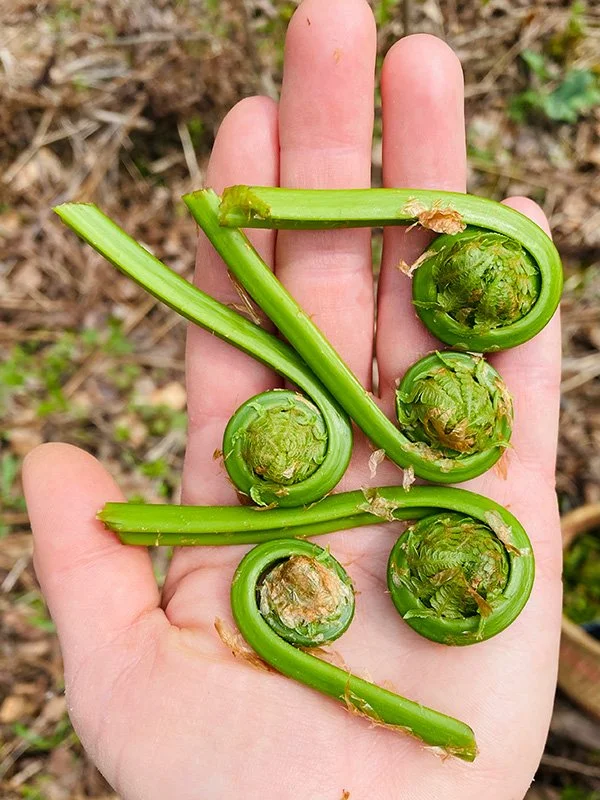
Fiddleheads are the young, coiled frond of the ostrich fern. When this fern is in its edible form, they are protected with a natural brown casing. The casing comes off quite easily and helps protect the delicate vegetable during and after harvest. When stored properly, fresh fiddleheads will last for 2 or more weeks.
Once you are ready to cook your fiddleheads, allow a little extra preparation time. We begin each recipe by soaking fiddleheads in a cold bath of water. This soaking process is the easiest method for removing the fiddlehead’s natural brown casing.
TIP: Fiddleheads can be stored in the fridge in a bowl of water a day or two before you cook them to speed up the cleaning process. See our Simple Sautéed Fiddlehead recipe below for more details on how to clean fiddlehead ferns.
Simple Sautéed Fiddlehead Recipe
Recipe from Overstory Farm
Ingredients:
1 quart fresh fiddlehead ferns
1 Tbspn. olive oil
1 Tbspn. butter (optional)
1-2 cloves fresh garlic, minced
Lemon juice and salt (to taste)
Directions:
Soak 1 quart of fresh fiddlehead ferns in a bowl of cold water for 10-15 minutes. This helps to easily remove the fiddlehead’s natural brown casings. Use your fingers or a spoon to agetate the fiddleheads when they are submerged in the water to encourage the release of their casings. Drain and rinse off any brown casings. Repeat this step, as needed, with clean water each time. Trim the ends of the cleaned fiddleheads to remove any brown ends.
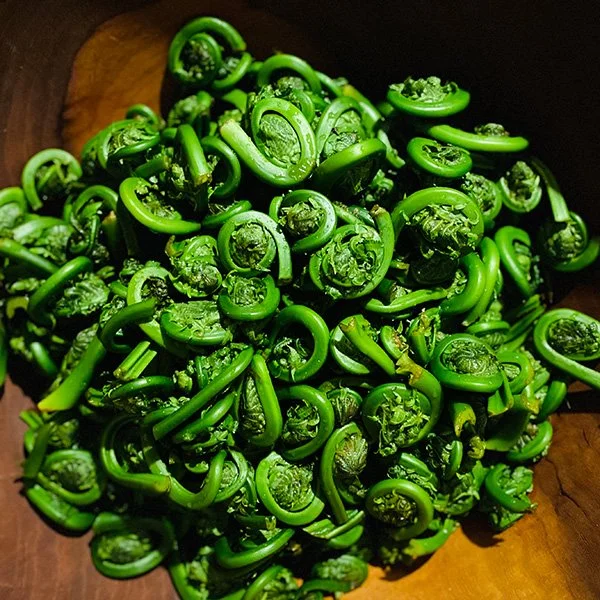
Bring a pot of water to boil.
Add the cleaned, trimmed fiddleheads to your boiling water and cook for 7-10 minutes. Use a colander to drain the cooked fiddleheads, rinsing them with cool water. Fiddleheads should keep their spiral shape after boiling.
Heat olive oil and (optional) butter in a sauté pan over medium heat. Add 1-2 cloves of fresh minced garlic and cook for 1 minute. Add the cooked fiddleheads and sauté for 3-5 minutes. Ideally, you want your total cooking time to be 15 minutes. To season, add a few dashes of lemon juice and salt to taste.
Recipe serves 4 as a side dish.
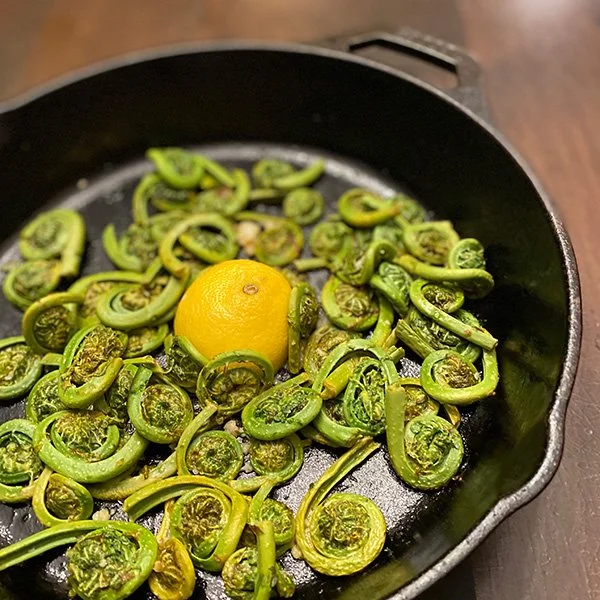
Serve immediately and enjoy!